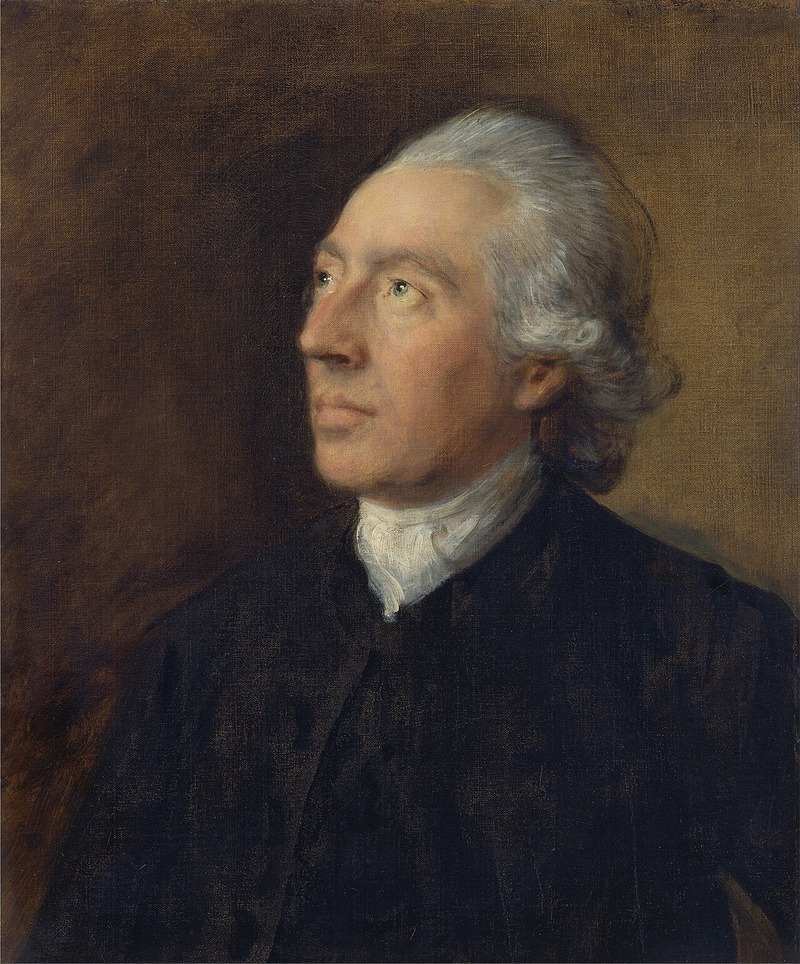
Humphrey Gainsborough portrait by his brother Thomas Gainsborough which was completed in 1774.
Today, Sunday 23 August, is the 250th anniversary of Humphrey Gainsborough’s death.
His brother, the painter Thomas who lived for another twelve years, is buried in Kew churchyard.
Engineer and inventor Humphrey Gainsborough lived in Henley where he was a Congregational minister for almost thirty years.
Towards the end of his ministry he helped to design Henley’s pound lock.
He was already known as an inventor. One of his inventions was the front door security chain and an early example can be found at his church Christ Church URC in Reading Road. His former home, The Manse, is next door.
Before the Thames Path’s diversion away from the lock it was possible to see across the water to a rustic road bridge, spanning the end of Happy Valley, which Humphrey Gainsborough also designed.
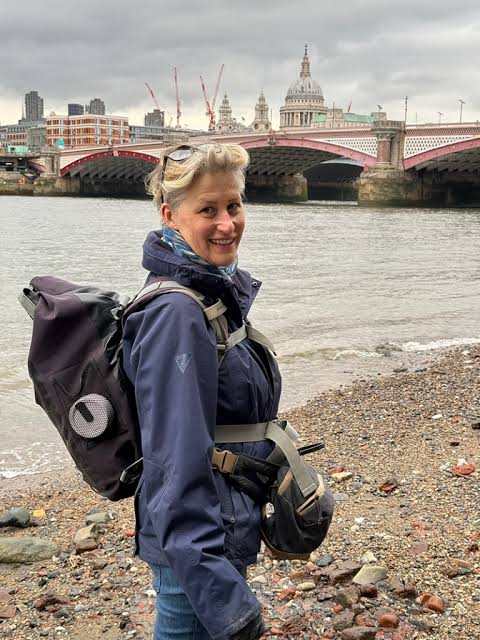
Lara has been mudlarking on the River Thames for almost 25 years and is the author of four books on the subject, including the Sunday Times bestseller Mudlarking: Lost and Found on the River Thames (Bloomsbury, 2019).
As Mudlark-in-Residence, Lara will continue to develop the Cathedral’s relationship with the river and its history. This will include supporting public engagement programming that connects with the heritage and stories found from the Thames.
‘I’ve so enjoyed bringing mudlarking to Southwark over the last seven years, and being made Mudlark in Residence really is a great honour,’ says Lara Maiklem.
‘Being so close to the river, the Cathedral is where mudlarking belongs and I’m looking forward to working with the wonderful Cathedral team to continue the exhibitions, talks, tours and festivals that have put Southwark Cathedral at the heart of the mudlarking community.’
The Very Revd Dr Mark Oakley, Dean of Southwark, says: ‘For more than 1,400 years people have arrived here by river, worshipped beside it, traded across it and crossed it on journeys of pilgrimage. Even our ancient name, St Mary Overie – St Mary ‘over the river’ – reminds us how deeply Southwark Cathedral’s identity is bound to the life of the Thames.
‘Lara’s work helps us to connect to our riverine past, enabling us to see the humanity behind the objects that are found on the foreshore. She has become a cherished friend of the Cathedral and we are delighted to recognise her continued contribution through this appointment.’
Southwark Cathedral’s sixth annual Heritage Craft and Mudlarking Festival on is on Saturday 25 July bringing together mudlarks, craftspeople, archaeologists, antiquarians, and authors for a day of demonstrations, talks, exhibitions and family activities.
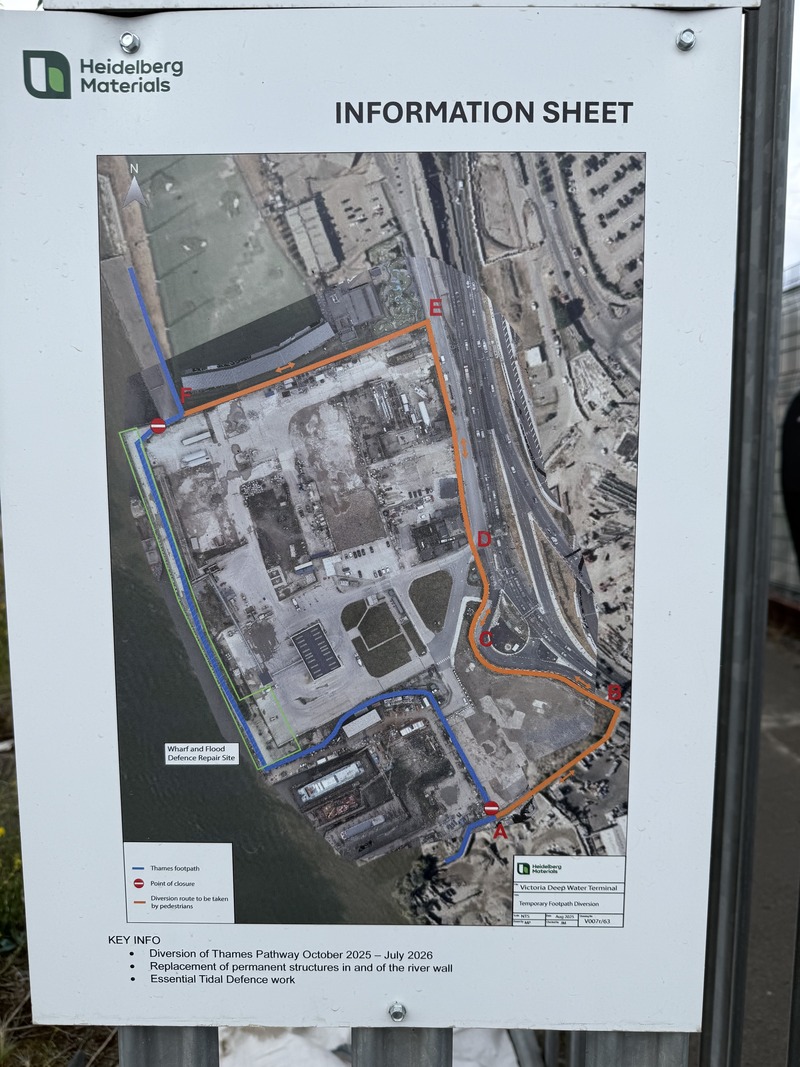
The Thames Path is being diverted for a year on the west side of the Greenwich Peninsula.
Shortly after the O2 and the drawdock, the path enters Delta Wharf. However, Victoria Deep Water Terminal beyond is closed to walkers as is Bay Wharf and Morden Wharf.
The diversion is left, inland, at the end of the golf range on Delta Wharf. At Tunnel Avenue go right for three quarters of a mile. Turn right into Telcon Way. This leads back to the river at Enderby House pub. Turn left on the Thames Path.
Thames Path manager Hannah Gutteridge holding the anniversary baton at Greenwich
A month after leaving the Source in Gloucestershire, the Thames Path 30th Anniversary baton has arrived in Woolwich.
The baton relay has involved hundreds of walkers and path volunteers and taken 24 days to complete.
The first party set out from the Source on Friday 5 June. Those there included Kate Ashbrook, Open Spaces Society general secretary, who had been present at the official opening in London thirty years ago.
The official opening in July 1996 was at the Thames Barrier where the new national trail at first ended/started. On that day the ceremony was preceded by a walk for guests from the Cutty Sark -the route replicated at the end of this year’s relay.
But on Sunday the walkers continued the short distance to Woolwich where the Thames Path now joins the King Charles III England Coast Path.
Forty years ago the plan was for the London end of the path to be at Westminster Bridge.
Leigh Hatts, who wrote 1984 Thames Path feasibility report and was also present at the 1996 opening, joined Sunday’s walk.
The Mayor of the Royal Borough of Greenwich, Cllr David Gardner, who has walked the Thames Path, said that he looked forward to being at the 50th anniversary celebration.
At the close of a post walk gathering at Woolwich Works, Thames’ poet in residence Robert Seatter read five of his thirty poems accessible via QR codes on the footpath’s fingerposts.
Also present was Rosalie Bloy who designed the 30th anniversary logo.
River Thames Society chair Peter Finch was presented with a personalised finger post in recognition for the help he has long given in maintaining the route through the capital.
Also receiving a finger post was Thames Path Partnership chair Wendy Tobitt whose many volunteer roles include looking after the path’s social media.
The final walk was hosted by the West London Ramblers whose chair Jackie Gower told walkers that the late David Sharp, who conceived the idea of a Thames Path, was one of their founding members and secretary.
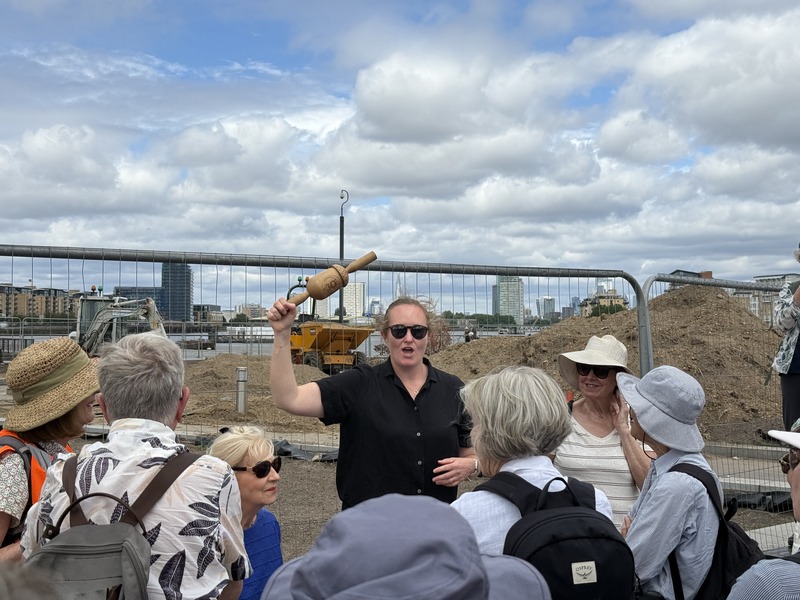
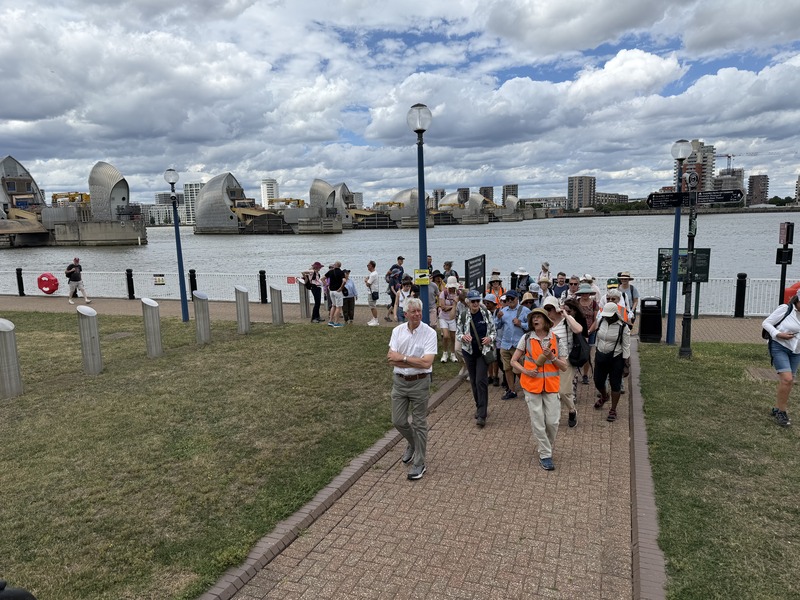
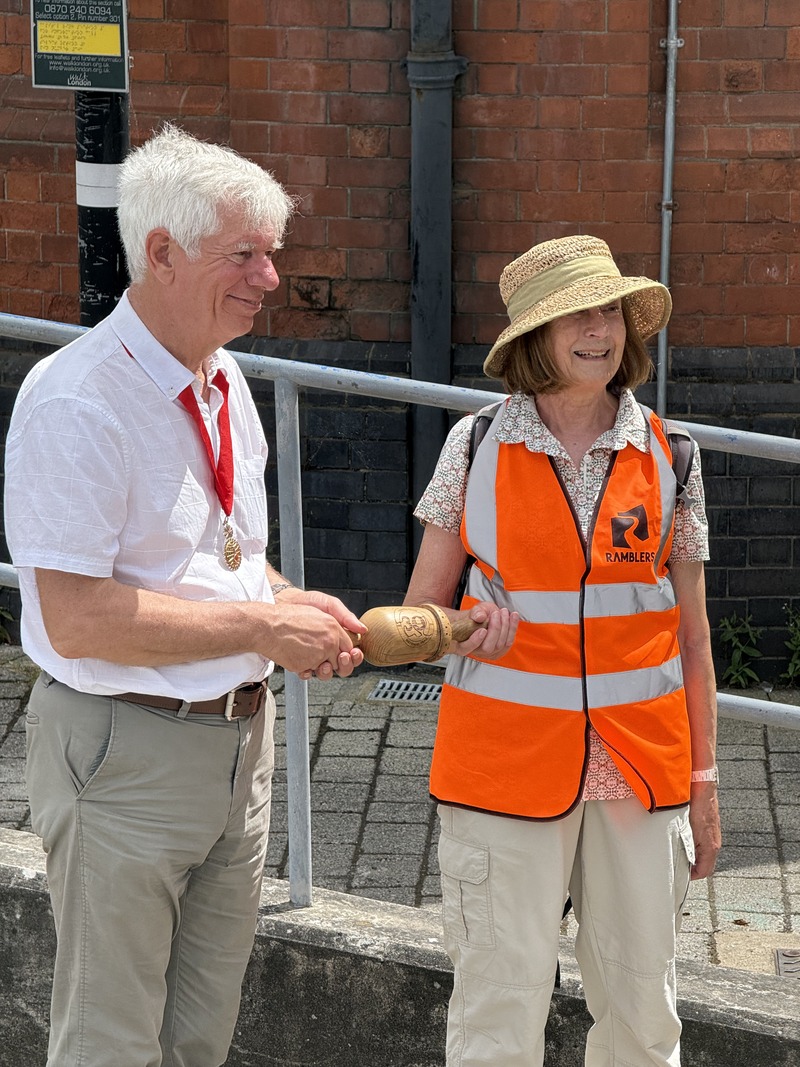
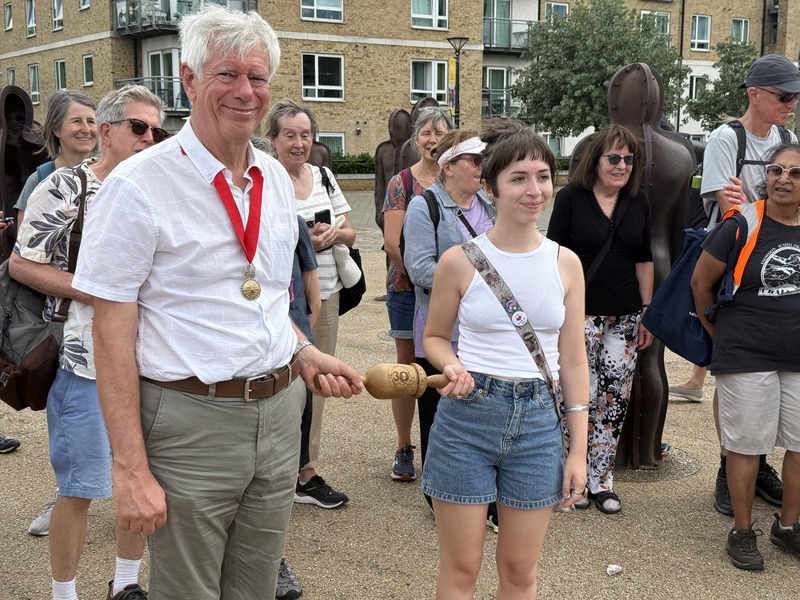
Walkers at the Thames Barrier path where the Thames Path was inaugurated in 1996The Mayor of Greenwich receives the baton from the West London Ramblers chair at the boundary of the Thames Path and the King Charles III England Coast Path next to the Woolwich Ferry.The Mayor of Greenwich and Rosalie Bloy holding the baton bearing her logo design.
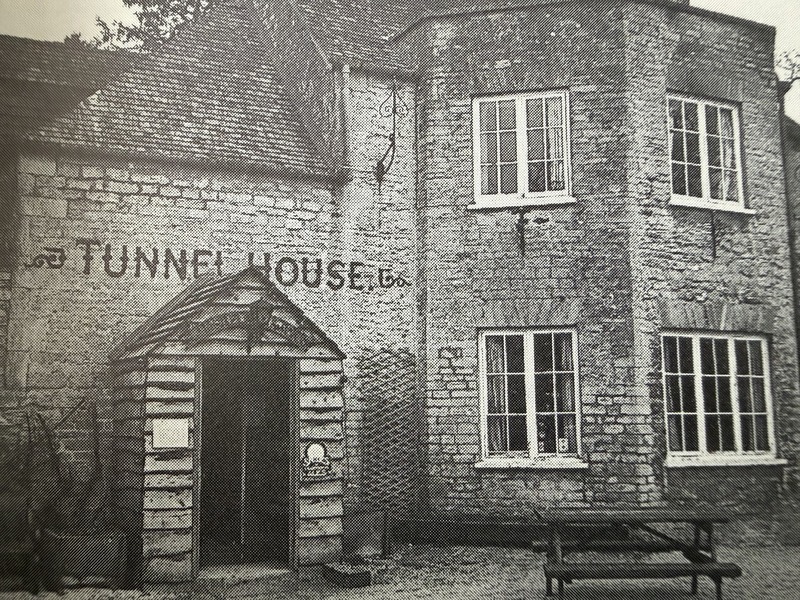
The Tunnel House Inn near the Source of the Thames has reopened.
In the early days of the Thames Path this was where many walkers would rest after completing their walk.
Instead of turning back towards Kemble, or climbing up to The Thames Head pub, there was the option of walking a mile along the redundant line of the Thames & Severn Canal to The Tunnel House.
The canal, which provided a continuation of the river, ran behind the source having left the Thames by the Roundhouse at Inglesham.
The canal towpath ends where the water entered a two mile long Sapperton tunnel built in the 1780s. Construction took two years and the Earl of Bathurst had the stone pub built at the southern entrance for the workforce.
Until closure five years ago The Tunnel Inn was an informal, cluttered pub with Thames memorabilia on the walls and real fires in winter. It was loved by locals who were waiting outside last Wednesday when the inn reopened.
Publican Peter Austen has spent years planning the reopening and months renovating the 225 year old building.
The Tunnel House Inn is at present open Wed-Thursday 12-10pm; Fri 12-11pm; Sat & Sun 12-8pm. Food is not available until later this summer – probably July.
Today the village church in Kemble, the last (or first) village on the river, is hosting the wedding of Princess Anne’s son Peter Phillips.
His bride is Harriet Sperling, a nurse who is coming upstream from St Thomas’ Hospital in London.
All Saints has the welcome landmark spire seen by walkers about to complete their walk of a lifetime. You know that you are nearly there where it comes into view.
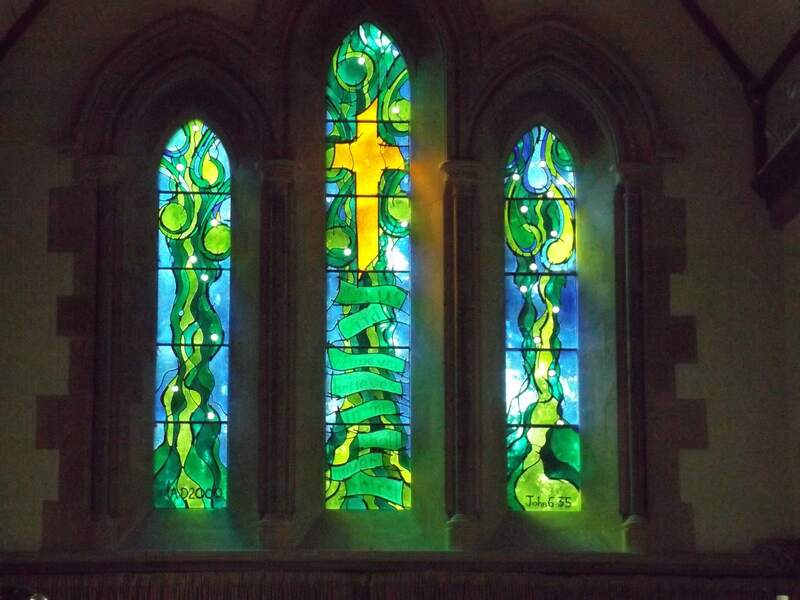
Harriet and Peter will stand before the east window which features the River Thames.
The artist is Mark Angus who at the Millennium received his brief from the church’s PCC wanting to recognise that Kemble and Ewen are the first communities on the river.
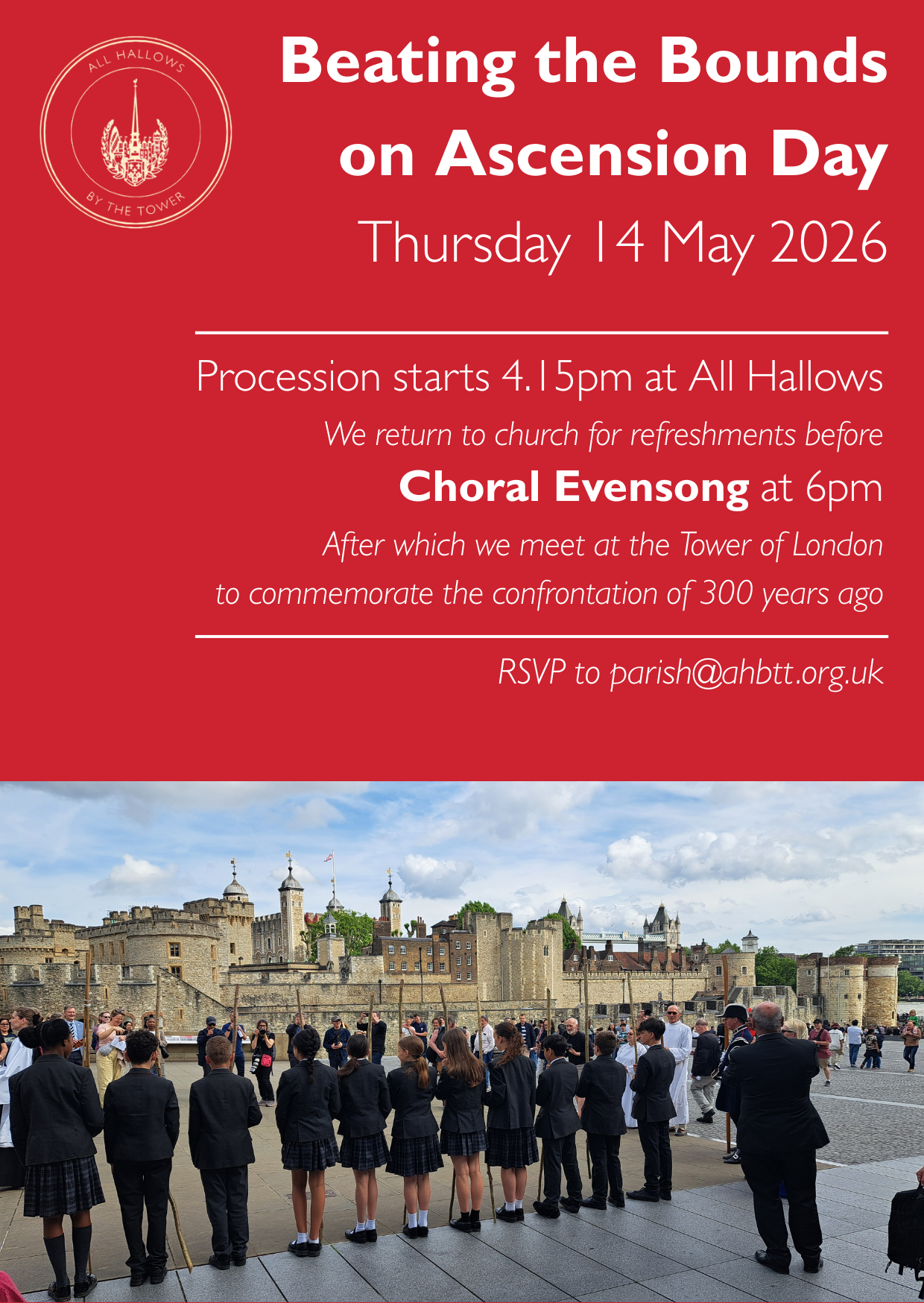
There will be the annual Beating the Bounds on the river near Tower Bridge this Thursday.
The boundary between the parish of All Hallows-by-the-Tower and St Mary Magdalen, Bermondsey runs mid-stream along the Thames.
This means that those involved in the annual Ascension Day Beating the Bounds around All Hallows have to take to the water.
A vessel with passengers holding sticks will set out from Tower Pier at about 4.30pm this Thursday 14 May. On land the participants beat the boundary stones but on the river one person will lean out of the boat to beat the water. Until recently a schoolboy was dangled upside down to reach the surface of the water.
This year the All Hallows parish will also ‘confront’ their neighbours -the Tower of London’s Beefeaters- on the eastern boundary.
Leigh Hatts writes: The Thames Path was inaugurated in 1996 with an opening ceremony at the Thames Barrier which was then the limit of the eastern, or downstream, end.
I recall that the occasion began with the arrival of a small party walking from Greenwich. It included David Sharp, the distinguished Ramblers’ lead on the proposed route. As author of the Countryside Commission’s Thames Walk feasibility study I was invited to join him.
During my eighteen months’ work I had much consulted David and used his initial Ramblers’ report as the base to discover what might be possible to turn a then fragmented route into a national trail.
Landowners on one side sometimes wanted the path to be on the other side.
On that opening day some houses in narrow Crane Street, near the Trafalgar Tavern, were decorated to welcome the walkers.
Marking the 30th anniversary of the Thames Path will be a month long relay walk along the route from the Source in Gloucestershire to Woolwich where the now extended Thames Path meets the new coast path.
On the final day the relay will cover that opening day walk from Greenwich to the Barrier and on to Woolwich.
***David Sharp and his wife Margaret are commemorated by a riverside seat at Barnes, a few yards from their home of many years. After the path opening David went on to be the original author the Thames Path guide to walking from the Source (Aurum Press) whilst I wrote Walking the Thames Path (Cicerone Press) for those wishing to start in familiar London and go upstream in search of the Source.
The United States of America is celebrating the 250th anniversary of its declaration of independence from Britain in 1776.
The key associations with England are mainly to be found along the River Thames.
The most obvious link that comes to mind is the Pilgrims Fathers since the 400th anniversary of the Mayflower setting sail from London was only recently marked. It’s difficult to describe it as having been a celebration since the anniversary fell during Covid. However, there was a ceremony on the river at Rotherhithe and on the Palace of Westminster terrace.
The Mayflower pub on Rotherhithe’s riverside is old and, although largely rebuilt, claims links with the Mayflower crew.
The ship left its home port of Rotherhithe in 1620 for America but probably picked most of its passengers downstream. The captain Christopher Jones is buried in Rotherhithe churchyard.
The first mate John Clark, also from Rotherhithe, has given his name to Clark’s Island in Massachusetts.
The charters creating the first two American colonies had been signed a little earlier at Greenwich Palace by James I who was in residence there in 1607 and again in 1620 when agreeing the charters of Virginia and Massachusetts. As a result there was a court ruling that the American colonies were technically in the Manor Greenwich and so represented at Westminster by the local MPs.
Putney Church, where the Thames Path runs round its south side, is known for the Putney Debates which took place there in 1647 and later influenced the drafting of the US Constitution.
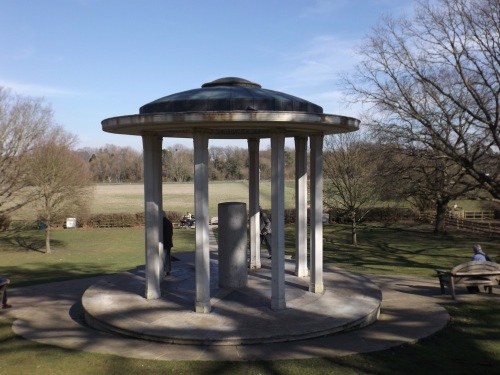
Another influence was Magna Carta which King John assented to in 1215 on Runnymede water meadow by the River Thames.
The site is marked by a memorial erected by the American Bar Association which is returning to London for its annual conference this year. The programme includes a visit to Runnymede.
Nearby is something even more extraordinary: a piece of land which has been declared as ‘American soil’ in memory of President Kennedy.
Sir William Blackstone lived at Wallingford next to the landmark St Peter’s with its candle snuffer steeple. His definitive book Commentaries On The Laws Of England is the source of common law for USA.
Just before this time, in 1737, Richmond in Virginia was given its name by lawyer William Byrd who was reminded of the view of the Thames from Richmond Hill when seeing the bend in the James River.
The divisions during the aftermath of the 1776 declaration can be seen in St Mary’s Battersea where the Thames Path runs through the churchyard. The church has a window commemorating military officer Benedict Arnold who in 1780 switched from the American to the British side. He is buried in the church whilst his name lives on in America as an idiom for a traitor. The window was created in friendship and paid for by an American.
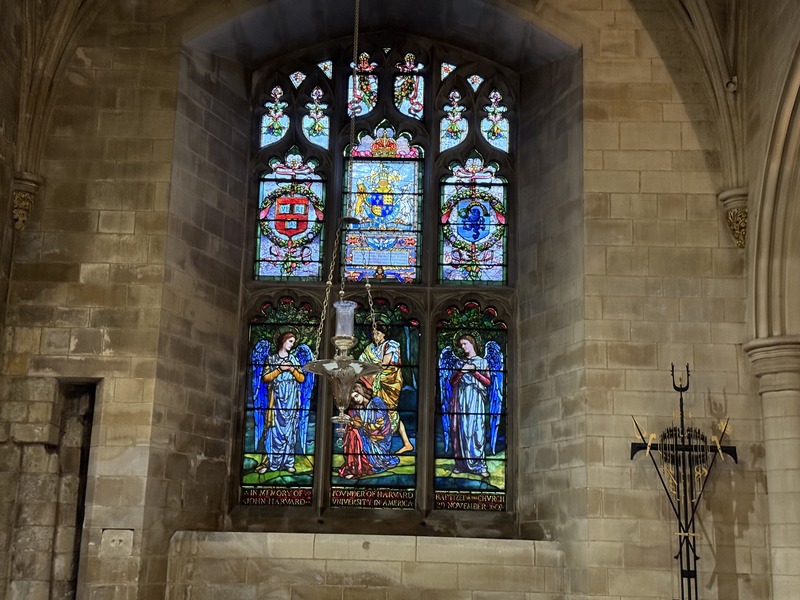
For Harvard graduates the place with the greatest resonance is riverside Southwark Cathedral. John Harvard, whose father was a butcher in Borough High Street, was baptised there in 1607. Its Harvard Chapel is in one of the oldest parts of the church.
The chapel’s east window is by American John Farge and donated in 1907 by the US ambassador who declared: ‘We reiterate the hope that all Harvard men will come to the rock from which they were hewn and to the hole of the pit from which they were rigged to the place where the founder of this great University spent much of his youth, and so add more links which bind this old country with the new.’